
Spanish Grammar · Verbs · Common Errors
Ser
VS
Tener
When Spanish Uses "To Have" Where English Uses "To Be"
One of the most common mistakes English speakers make in Spanish — and one of the easiest to fix once you understand the pattern.
Ser vs tener is one of the grammar points that confuses English speakers most — because Spanish uses tener (to have) in dozens of situations where English uses to be. And if you don’t know the pattern, you’ll make the same mistake over and over without knowing why.
You’ve probably said it before — Estoy hambre instead of Tengo hambre. Or Soy caliente when you meant you were warm. These aren’t random errors — they follow a very specific pattern that, once you see it, you’ll never forget.
In this article, we’ll explain exactly when Spanish uses tener where English uses to be, show you the most common expressions, and give you real examples so you can start using them correctly from today.
💡 Important Note for English Speakers
In English, “to be” does almost everything — “I am hungry,” “I am cold,” “I am 25 years old,” “I am right.” In Spanish, these expressions are divided between several verbs — ser, estar, and tener each handle different situations. However, the good news is that once you learn which expressions use tener, they become automatic very quickly — because they always follow the same pattern.
🟢Grammar makes sense in real conversation🟢
Learn ser vs tener in context — not just on paper.
In our trial class, we practice grammar like this in real sentences and real situations — until it comes out automatically without thinking. Book your free class today.
No commitment · Just a real conversation in Spanish
Ser vs Tener: The Key Difference
Before diving into the expressions, let’s establish the key difference between these two verbs — because understanding this makes everything else click.
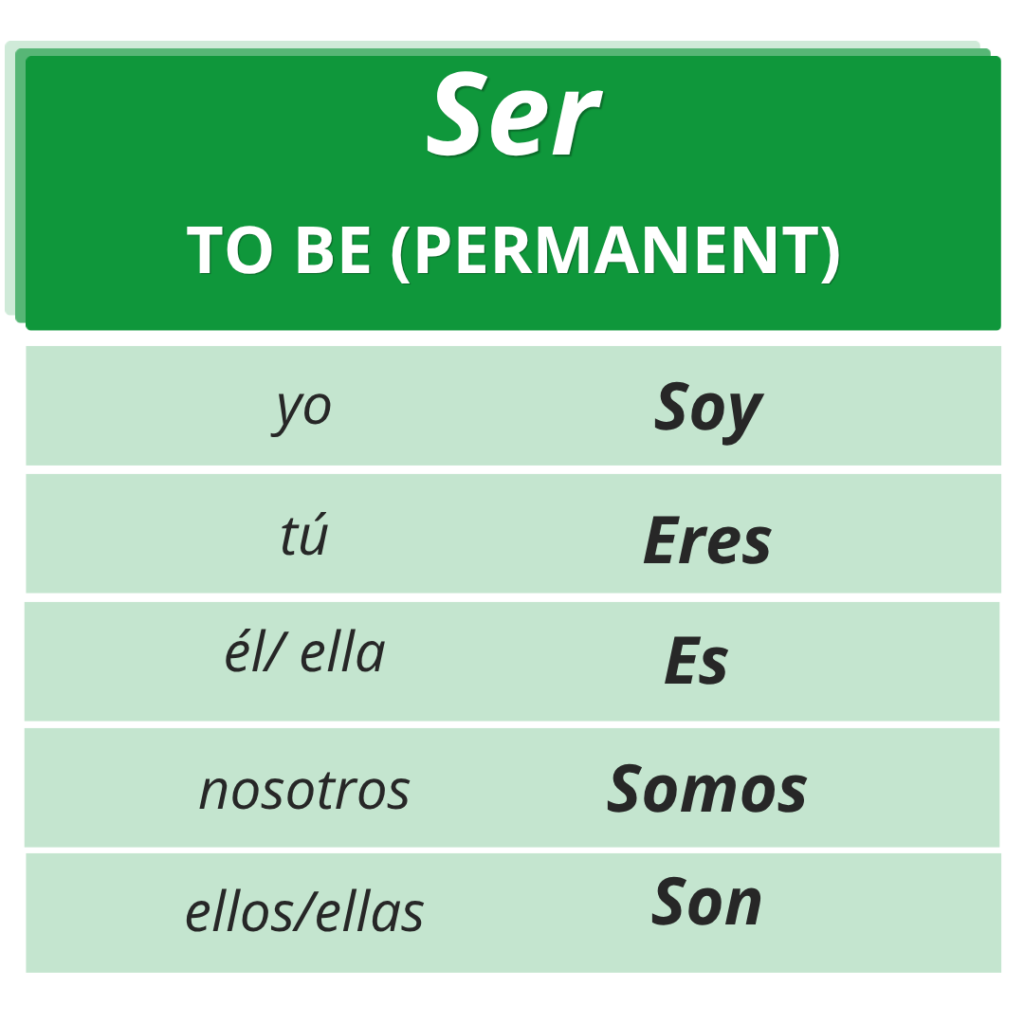
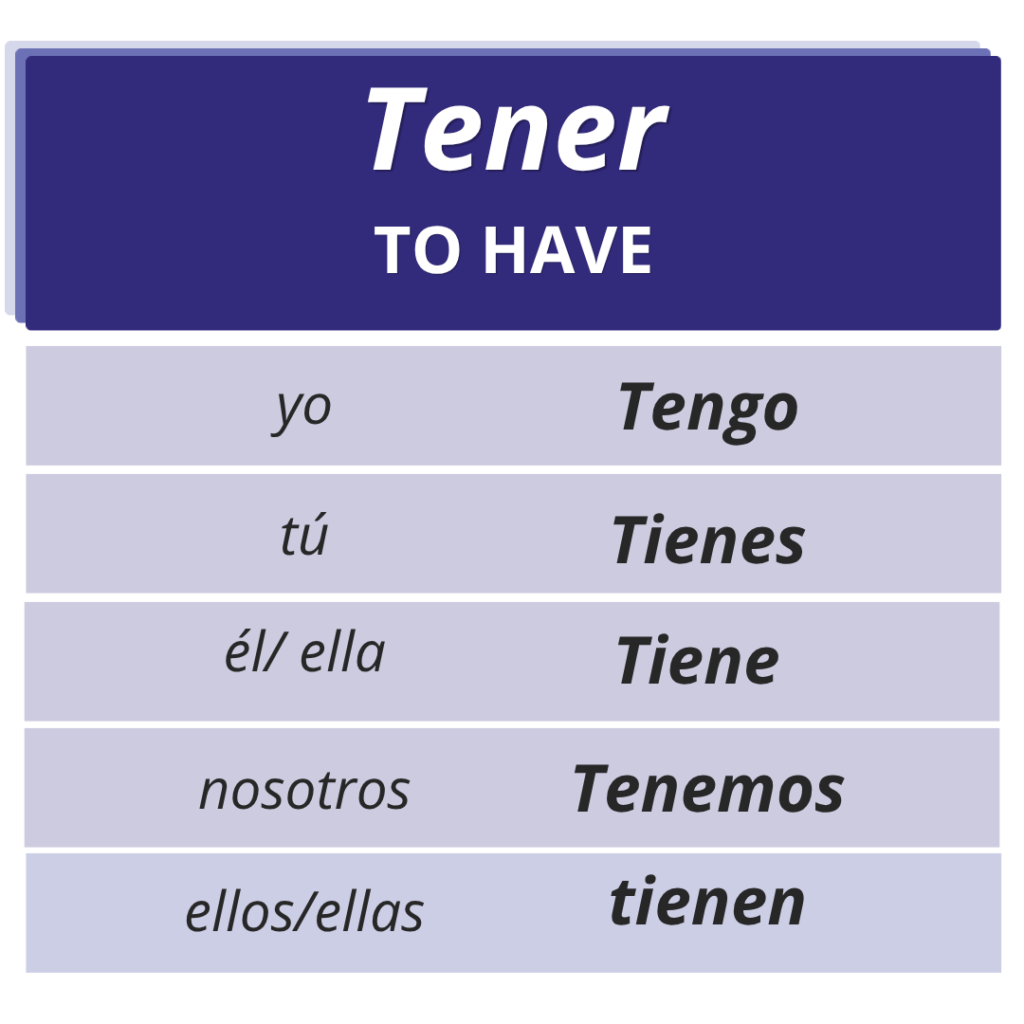
Ser describes identity and permanent characteristics — who or what something is. Tener literally means “to have” — but in Spanish, many physical and emotional states are expressed as things you “have” rather than things you “are.”
Therefore, in Spanish you don’t be hungry — you have hunger. You don’t be cold — you have cold. You don’t be 30 years old — you have 30 years. This is the key insight that unlocks the entire pattern.
🔑 The Golden Rule
Ser vs Tener: The Most Common Expressions
Here are the most important tener expressions that English speakers need to know — organized by category, with real examples and the most common mistake for each one.
Physical sensations
1
Tener hambre / sed
In English you are hungry. In Spanish you have hunger. This is one of the first tener expressions learners encounter — and one of the most common to get wrong.
✕ Estoy hambre / Soy hambre
2
Tener frío / calor
This one trips up English speakers constantly — especially because caliente exists in Spanish but means something very different when applied to a person. Never say Soy caliente to mean you’re warm — in most Latin American countries, that means something completely different and very inappropriate.
✕ The Mistake
Using ser or estar for physical sensations — translating directly from English.
✓ The Fix
Use tener + noun for physical sensations. Think “I have heat/hunger” not “I am hot/hungry.”
3
Tener sueño
In English you are sleepy. In Spanish you have sleep. This expression is used constantly in daily conversation — however, note that tener sueño means feeling sleepy, not being asleep. If someone is already asleep, you’d say está dormido/a.
🟢Are you making these mistakes?🟢
One class is enough to fix them permanently.
Most of these errors disappear after one focused speaking session where you practice them in real sentences. Book a free trial class and leave with these patterns automatic.
Free trial · No credit card · No obligation
Age and time
4
Tener... años
Age in Spanish is always expressed with tener — never with ser. This is one of the clearest examples of the pattern: in Spanish, you don’t be 30 years old, you have 30 years. Therefore, this is one of the first things to memorize.
¿Cuántos años tienes?
Emotions and mental states
5
Tener miedo
Fear in Spanish is something you have, not something you are. In fact, this applies to many emotions in Spanish — you have fear, you have shame, you have luck. The pattern is consistent once you recognize it.
Tengo miedo de hablar en público.
No le tengas miedo a los errores.
6
Tener vergüenza
Just like fear, embarrassment in Spanish is expressed with tener. However, note the difference between tener vergüenza (to feel embarrassed) and ser un sinvergüenza (to be shameless/a scoundrel) — the same root word used in completely different ways.
Tengo vergüenza de pronunciar mal.
No tengas vergüenza — así se aprende.
RELATED - OVERCOME THE FEAR
Other essential tener expressions
7
Tener razón
This one surprises English speakers most. In English, being right is a state — “you are right.” In Spanish, being right is something you possess — “you have reason.” Therefore, whenever you want to say someone is right or wrong, reach for tener.
You’re right — I hadn’t thought of it that way.
No tengo razón en esto — me equivoqué.
8
Tener prisa
In English you are in a hurry. In Spanish you have hurry. This expression is extremely common in daily conversation — and always uses tener, never ser or estar.
Tengo mucha prisa — hablamos luego.
No tengas prisa, llegamos bien.
9
Tener suerte
Luck in Spanish is something you have, not something you are. In fact, this makes intuitive sense — luck feels like something external that comes to you, not an intrinsic quality. Spanish captures that perfectly with tener suerte.
You’re so lucky! Things always work out for you.
Tuvimos suerte de llegar antes de la lluvia.
In Spanish, you don't be hungry, cold, afraid, or right. You have hunger, cold, fear, and reason. Once that shift clicks — the whole pattern becomes natural.
Ser vs Tener: The Complete Reference List
Here’s a quick reference of all the most important tener expressions — the ones that English speakers most commonly get wrong by using ser or estar instead.
- Tener hambre — to be hungry
- Tener sed — to be thirsty
- Tener frío — to be cold
- Tener calor — to be hot/warm
- Tener sueño — to be sleepy
- Tener... años — to be... years old
- Tener miedo — to be afraid
- Tener vergüenza — to be embarrassed
- Tener razón — to be right
- Tener prisa — to be in a hurry
- Tener suerte — to be lucky
- Tener cuidado — to be careful
- Tener éxito — to be successful
- Tener sentido — to make sense
⚠️ Common Mistake
Translating these expressions word by word from English. When you feel cold in Spanish, your brain reaches for “I am cold” → Estoy frío — because that’s the literal translation. However, estoy frío means “I am cold” in a personality sense (emotionally distant) — not physically cold. The fix: memorize the tener expressions as complete phrases, not word-by-word translations.
When to Use Ser vs Tener — The Simple Decision
After all these examples, here’s the simple rule that covers most situations:
📋 The Simple Rule
However, the fastest way to get these right is not to memorize the rule — it’s to practice the expressions so many times that they become automatic. The moment you stop translating from English and start reaching for the Spanish expression directly, the mistakes disappear.
WHY DIRECT TRANSLATION CREATES THESE ERRORS
THE BIGGER PICTURE
This article is for you if...
You’ve been making mistakes like estoy hambre or soy caliente and didn’t know why. You understand Spanish well but your spoken Spanish still sounds unnatural in these situations. Or you want a clear, practical reference for when to use ser vs tener — with real examples you can use immediately.
🟢Grammar in your head vs grammar in your mouth🟢
You know the rule. Now let's make it automatic.
Book a free 30-minute trial class with Spanish Chévere. We’ll practice these expressions in real conversational situations — until tengo hambre comes out before your brain even finishes thinking.
Free trial · No credit card · No obligation
The Bottom Line
The ser vs tener confusion is one of the most predictable mistakes English speakers make in Spanish — because English uses “to be” for almost everything, while Spanish distributes those functions across multiple verbs.
The fix is simple: stop translating. Instead of thinking “I am hungry → estoy hambre,” train your brain to reach directly for tengo hambre as a complete unit. The same applies to all the expressions on this list — they work best when they’re stored as ready-made phrases, not as translations.
Read through the list one more time. Pick three expressions. Use them in a real sentence today — out loud, in context. That’s the practice that makes them permanent.
Tienes razón si practicas. Tienes suerte si empiezas hoy.